
A few months ago, I sat in front of my IDE, staring at our SaaS platform’s metrics. The charts looked exactly like what every tech investor in 2026 tells you to look for: steady user growth, clean API integrations, and an elegant dashboard.
But looking past the surface metrics, I noticed a troubling trend.
Every time a frontier AI lab dropped a new model update, our "wrapper" features became obsolete overnight. When token prices dropped, our margins compressed. We were trapped in a classic horizontal software illusion: we were buying intelligence from OpenAI or Anthropic, packaging it into a clean interface, and trying to sell it as a proprietary solution.
Deep down, I knew we were just a glorified middleman. We didn’t own the value chain. We were completely vulnerable to the platform risk of the very labs we relied on.
Then, Anthropic dropped a bombshell.
They launched Claude Science, a specialized workbench designed explicitly for scientific research, and announced they are actively pursuing in-house drug discovery for neglected tropical diseases.
  [ Old SaaS Thesis ]                      [ The 2026 Reality ]
  +--------------------+                   +----------------------+
  | Frontier AI Labs   |                   |  Frontier AI Labs    |
  | (Sells raw tokens) |                   |  (Owns the Vertical) |
  +----------+---------+                   +----------+-----------+
             |                                        |
             v                                        v
  +--------------------+                   +----------------------+
  | Your SaaS Startup  |                   |  Eliminates Middle-  |
  | (UI / Wrapper)     |                   |  man (SaaS Wrappers) |
  +----------+---------+                   +----------------------+
             |
             v
  +--------------------+
  |  End Industry      |
  +--------------------+
Let that sink in. A company known for building foundation LLMs isn't just selling chat tools to Pfizer or Moderna anymore. They are hiring structural biologists. They are stepping onto the wet-lab floor. They are bypassing the traditional software middleman to discover physical molecules themselves.
As a founder building an AI-driven software company, this was my ultimate wake-up call. The era of the horizontal AI utility is officially dead. If you want to survive the next shift, you cannot just sell software anymore. You have to own the entire industry vertical.
The Trap of the Horizontal API
When we first built our startup, the architecture seemed foolproof. Frontier labs did the heavy lifting of training trillion-parameter models, and we used their APIs to solve niche business problems. It was a beautiful, low-overhead strategy.
But this model has a major structural flaw: the LLM commodity curve.
Raw intelligence is experiencing a deflationary spiral. The cost of processing tokens is dropping toward zero, driven by open-source alternatives and massive compute efficiency gains. If your startup's core value proposition is simply routing data to a generalized model and displaying the output, your product's defensibility is essentially non-existent.
Furthermore, generalized models suffer from the "Last Mile" Context Chasm. A generic LLM doesn't understand the hyper-specific, multi-modal topologies of specialized industries out of the box.
More importantly, it lacks a proprietary data flywheel. When your product operates entirely in the software abstraction layer, you remain isolated from real-world execution. If you don't own the final outcome, you can't capture the deep operational feedback loops required to truly optimize the system.
Anthropic recognized this limitation. By taking Claude out of the chat window and embedding it into an end-to-end operational vertical, they transformed a generic software tool into an incredibly defensible business engine.
Deconstructing the Vertical AI Engine
How exactly does a software platform pivot from a generic assistant to a full-stack engine?
The blueprint lies within the operational architecture of Claude Science. Anthropic didn't just build a better prompt field; they engineered a cohesive data-to-execution pipeline designed to eliminate friction in highly specialized environments.
We can map this progression across three distinct architectural phases:
1. Discovery Context Libraries
First, the engine acts as an advanced Retrieval-Augmented Generation (RAG) system, instantly ingesting and parsing dense, multi-modal research libraries, unstructured laboratory notes, and complex genetic databases. It completely bypasses the limitations of generic data processing by establishing a highly accurate localized knowledge graph.
2. The Simulation Workbench
Next, the reasoning engine moves directly into execution. It automatically generates and runs validation code (such as specialized Python scripts) to screen thousands of molecular compounds, running simulations and predictive modeling in real-time without requiring manual data transfers between detached software suites.
3. Validation Tracking & Physical Feedback
Finally, the software bridges the gap into the physical world. It maps out wet-lab synthesis plans and establishes a closed-loop system where experimental physical data feeds straight back into the AI engine, iteratively refining the predictive models based on actual real-world success or failure.
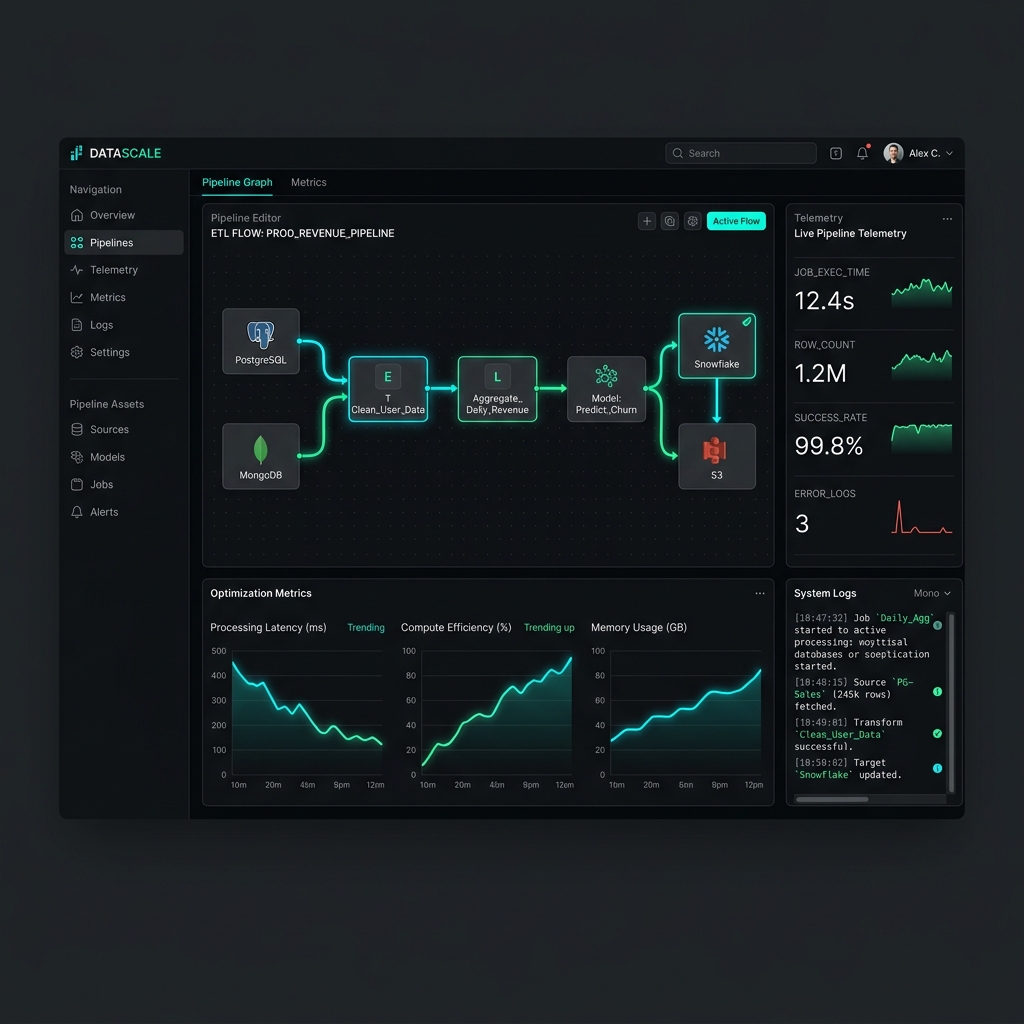
We can see this exact system design visualized in the operational flow diagram below:
The Counter-Positioning Strategy
Anthropic's choice to focus this platform on neglected diseases is a brilliant, calculated product move.
Big Pharma traditionally avoids these areas because the financial returns rarely justify the massive, multi-billion-dollar R&D overhead of traditional molecule discovery. By targeting a market space with low commercial competition, Anthropic can rapidly battle-test their vertical platform in the real world.
Once they prove their end-to-end workbench can successfully discover viable compounds at a fraction of the traditional cost and time, the implications will completely redefine the software landscape across every vertical.
From "Software as a Service" to "Outcome as a Service"
As a founder, this realization completely changes how I think about product design, value metrics, and user experience. When you move to Full-Stack Vertical AI, the traditional SaaS metrics we used to obsess over completely break down.
| Dimension | The Traditional SaaS Paradigm | The Full-Stack Vertical AI Paradigm |
|---|---|---|
| Core Value Metric | Seat licenses, user count, or token consumption. | Direct cost per successful discovery or outcome. |
| Data Loop | User prompts, UI click-tracking, and session time. | Deep operational telemetry and physical validation feedback. |
| UX/UI Aesthetic | Flashy graphics, complex navigation, generic templates. | High-density, high-contrast, text-first functional minimalism. |
| System Architecture | Thin frontend API wrapper over a single model. | Multi-tenant RAG, local orchestration, custom tool execution. |
In this new paradigm, we are no longer building tools that help a user perform a task. We are building the infrastructure that delivers the outcome itself. The user's role shifts dramatically from an active creator executing manual steps to a high-level editor and strategic validator.
How We Are Rebuilding Our Startup for the Vertical Shift
If you are a founder, developer, or product leader, you cannot afford to play the old game. If the foundational labs are coming to own the verticals, a thin UI wrapper is a guaranteed path to obsolescence.
To survive this transition, we completely overhauled our startup's product strategy around three core architectural pillars:
1. Embrace Functional Minimalism
We threw out our over-designed, graphic-heavy UI layouts. In a professional, high-velocity vertical environment, users don't want flashy illustrations or bloated, multi-step wizards. They need high-density, text-first, high-contrast dashboards—very much inspired by the clean, modular bento-box layouts used by platforms like Linear and Vercel. The interface must act as a precise, zero-latency command center built for rapid expert review.
2. Build In-Depth, Multi-Tenant Context Infrastructure
You cannot compete with frontier labs on massive, generalized computing power. Your structural moat lies entirely within the context layer. We pivoted our engineering resources toward building deep, multi-tenant RAG systems capable of securely handling, indexing, and reasoning over complex, highly localized industry documentation. The platform that aggregates and utilizes the cleanest, most specialized domain context wins the vertical market.
3. Eliminate Single-API Platform Risk
Relying exclusively on a single third-party API is an existential risk for any modern tech company. We re-engineered our platform's backend infrastructure to support multi-LLM orchestration. Our system is now designed to route high-volume, routine tasks to highly optimized, cost-effective local or open-source models, reserving expensive frontier engines strictly for complex reasoning and advanced analytical tasks.
The Next Horizon
Anthropic’s move into biotech marks the definitive end of the first AI software wave. The novelty of conversational chat boxes has faded. The market is no longer impressed by an application that simply restates information or writes basic copy.
We have officially entered the era of operationalized intelligence.
The breakthrough software companies of the next decade won't be simple middleware applications selling access to other platforms' technology. They will be full-stack operators that leverage elite reasoning capabilities to directly manage physical supply chains, run complex financial networks, optimize advanced manufacturing, and discover life-saving therapeutics from the ground up.
We took our software out of the wrapper and built it into the core of the vertical workflow. The lines between software, data, and industry execution have changed forever—and there is absolutely no turning back.